

Decluttering Memories — and Why It’s Never Just About the Stuff
Decluttering is about making space, isn't it?
And sometimes it’s about self-honesty, decluttering memories — the emotional kind that quietly build up behind closed doors.
We’ve all got one — that spot where we hide the things we can’t quite face. A drawer, a cupboard, a digital folder.
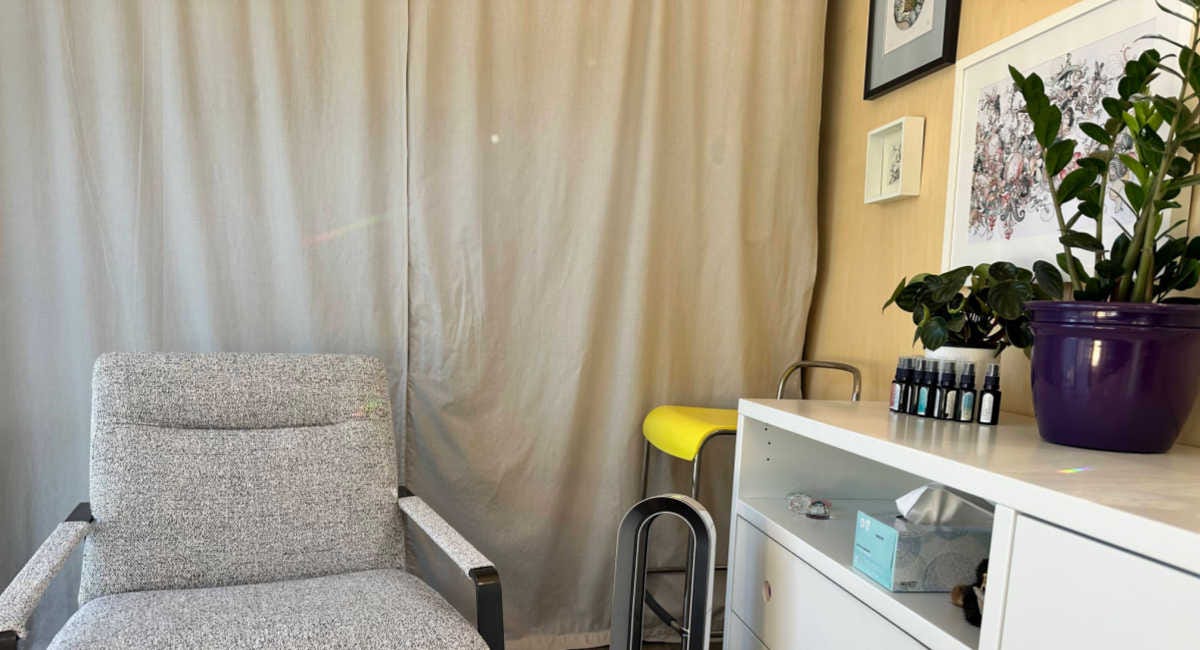
Mine’s behind a curtain — a long grey one at the end of my office cabin. It conceals shelves of training gear, manuals, business admin, stationery, and a sewing machine that’s been waiting patiently for me to stop using “it’s too hard to reach” as an excuse.
It looks tidy enough from the outside — serene, even — but I know what’s lurking behind it: stuff. And not just the physical kind. I’ve created my own little museum of emotional clutter; a shrine to good intentions and sentimental attachments I haven’t been ready to face.
Last weekend, with Tiny House Diaries finally complete and waiting for its cover design, I decided to do something radical: take a leaf out of my own book, remove the curtain and tackle one box.
Labelled “Photo Albums” in heavy blue marker (which should have given me a reminder of its weight!), the box came crashing down on my head, forcing me off the step stool and onto the floor. “That’s a good start!” I told myself — glad I was still conscious to think anything! I sat among the debris and thought, “Right. Let’s start sorting these photos before they literally knock me out.”
Sitting there surrounded by photo albums, I realised this wasn’t just about sorting things — it was about decluttering memories and the emotions attached to them.
One by one, I began leafing through decades of photos — holidays, friends, family, the dodgy hairstyles, and questionable clothing choices. What I noticed surprised me: the images that tugged at my heart weren’t the picture-perfect landscapes, but the people. Every snapshot was an emotional anchor, holding me to a moment I’d long since moved on from.
When memories become emotional clutter
It turns out decluttering memories can be far trickier than sorting your sock drawer. Each photo held a story — joy, laughter, sadness, longing. Some made me grin; others stopped me cold. There were people I’d loved, people I’d lost, and people I still hold dear to my heart.
As I sorted, I could hear that internal voice — Naggy McNaggface — whispering, “You haven’t looked at these in years. Why keep them now?”
Naggy McNaggface had a point. Most of the shots of mountains, beaches, and exotic cities didn’t move me at all. Beautiful, yes. But hollow without the people who gave them meaning. The photos that stayed were the ones that carried real connection — the laughter, the warmth, the sheer absurdity of shared moments. Everything else was, quite literally, sentimental clutter.
How to let go without losing the meaning

Here’s what I learned (apart from “wear a crash helmet when decluttering”):
Photos, letters, keepsakes — they’re all emotional anchors. When you start decluttering memories, you’re really making peace with the emotions that go with them. They hold the feeling of the moment, not just the image or the object — that’s why we take photos in the first place. Once you’ve reconnected with that emotion — really felt it and given it space — the physical thing often becomes easier to release.
So if you’re tackling your own pile of “stuff,” whether that’s a bursting wardrobe or a mental box marked sort later, pause before you start binning things. Ask yourself:
What emotion is this tied to?
Is it still relevant, or am I just afraid to let it go?
Would a digital copy — or even just the memory — be enough?
You might discover that letting go of the past doesn’t erase it — it just stops it from taking up shelf space in your present.
Behind every curtain
After two full days, another box of photos, and a mild concussion, I’d made several nostalgic detours. I’ve ended up with one small box of photos — and a surprising sense of lightness. Some photos I’ll give away, others I’ll scan to my computer.
Decluttering isn’t only about tidying. It’s about truth. It’s about asking, “What still has meaning for me now?” and having the courage to release what doesn’t.
We all have a curtain — literal or metaphorical — hiding something we’ve avoided facing. Maybe this is your nudge to open it, one small box at a time. Because decluttering memories can clear far more than just shelves — it clears space in your mind, too.
Be gentle with yourself. Take your time. Relive the memories. Then decide what to let go of.
You might just uncover a lighter heart along the way.